The Rise and Fall of Savings and Loans Understanding the Impact of Interest Rates on Homeownership
The story of savings and loan associations (S&Ls) is deeply tied to the American dream of owning a home. These institutions began with a clear social mission: to help people buy homes by providing mortgage loans. Yet, the financial challenges they faced, especially during periods of rising interest rates, reveal how fragile this mission became. This is post 1 of 2, and explores the origins of S&Ls, the impact of interest rate changes on their stability, and the regulatory responses that shaped their fate.
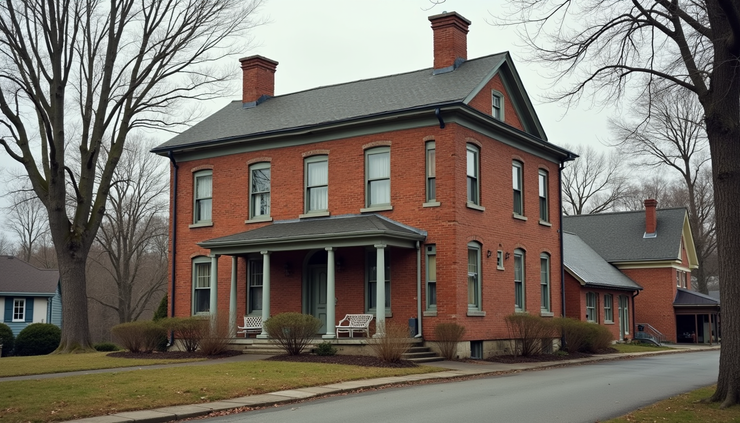
Origins of Savings and Loans and Their Role in Homeownership
Savings and loan associations trace back to 1831 in Pennsylvania, where the first S&L was founded with the goal of promoting homeownership. Unlike commercial banks, S&Ls focused primarily on mortgage lending, offering long-term, fixed-rate loans to individuals. This focus made homeownership more accessible to many Americans by providing affordable financing options.
The model was simple: S&Ls collected deposits from local savers and used those funds to issue mortgages. Because these mortgages were long-term and fixed-rate, the institutions relied heavily on stable funding sources. Depositors, however, often kept their money in accounts with short maturities, meaning S&Ls had to manage the risk of funding long-term loans with short-term deposits.
How Interest Rates Affected S&Ls in the 1970s and 1980s
The financial structure of S&Ls made them particularly sensitive to changes in interest rates. During the late 1970s, inflation accelerated rapidly, and the Federal Reserve responded by raising interest rates sharply. This created a difficult environment for S&Ls:
Rising deposit rates: To attract and keep depositors, S&Ls had to offer higher interest rates on deposits.
Fixed mortgage returns: The income from existing long-term fixed-rate mortgages did not increase, leaving S&Ls with a shrinking margin between what they earned and what they paid out.
Losses and insolvency: Many S&Ls began to suffer significant financial losses as their costs rose but their income remained fixed.
By 1983, the situation had worsened to the point where it was estimated that paying off insured depositors of failed S&Ls would cost about $25 billion. However, the Federal Savings and Loan Insurance Corporation (FSLIC), which insured deposits, had reserves of only $6 billion. This gap highlighted the severity of the crisis.
Regulatory Responses and Their Consequences
Faced with widespread insolvency among S&Ls, regulators chose a strategy of forbearance. Instead of closing insolvent institutions, many were allowed to remain open despite their financial troubles. These struggling institutions became known as "zombies" because they operated without sufficient capital to support their obligations.
Several regulatory changes followed:
Lowered capital standards: Both legislation and regulatory decisions reduced the capital requirements for S&Ls, allowing weaker institutions to continue operating.
Expanded lending authority: Federally chartered S&Ls gained permission to make riskier loans beyond residential mortgages. Some states also allowed even broader lending activities for state-chartered thrifts.
Increased deposit insurance limits: The limit on insured deposits rose from $40,000 to $100,000. This made it easier for troubled S&Ls to attract deposits, even though their financial health was questionable.
These changes aimed to stabilize the industry but also encouraged risk-taking. Many S&Ls ventured into commercial real estate and other speculative loans, which increased their vulnerability.
The Impact on Homeownership and the Broader Economy
The crisis in the savings and loan industry had a ripple effect on homeownership and the economy:
Reduced mortgage availability: As many S&Ls struggled or failed, fewer institutions were willing or able to offer affordable home loans.
Higher borrowing costs: The instability in the thrift industry contributed to higher interest rates on mortgages, making homeownership more expensive.
Taxpayer burden: The government eventually had to step in with a bailout to cover the losses of failed S&Ls, costing taxpayers billions of dollars.
This period serves as a cautionary tale about the risks of mismatched funding structures and the importance of sound regulation in financial institutions that serve critical social goals.
Lessons Learned from the S&L Crisis
The savings and loan crisis offers several important lessons:
Interest rate risk matters: Financial institutions must carefully manage the risk that rising interest rates can squeeze their margins, especially when funding long-term assets with short-term liabilities.
Regulatory oversight is crucial: Allowing insolvent institutions to continue operating without adequate capital can worsen financial problems and increase systemic risk.
Deposit insurance limits influence behavior: Raising insurance limits can help maintain confidence but may also encourage risk-taking if not paired with strong supervision.
Diversification of lending can be risky: Expanding into unfamiliar or riskier loan types without proper risk controls can threaten an institution’s stability.
What This Means Today for Homebuyers and Financial Institutions
While the S&L crisis happened decades ago, its lessons remain relevant. Homebuyers depend on stable mortgage lenders, and financial institutions must balance social goals with prudent risk management. Today’s mortgage market benefits from stronger regulations and more diversified funding sources, but interest rate risk still poses challenges.
For individuals looking to buy a home, understanding how financial institutions operate can help in making informed decisions about mortgages and financing options. For policymakers and regulators, the history of S&Ls underscores the need for vigilance in overseeing institutions that play a key role in housing finance.
authored and complied by Bradley D. Barnes, MBA
from publicly available references from the Federal Reserve
FDIC Banking Review, Vol. 13 No. 2


Comments