Harnessing the Sun and Storage: How Google is Revolutionizing Data Center Energy Strategies
Data centers power the digital world, but they also demand enormous amounts of electricity. As hyperscale data center developers face growing challenges with grid congestion and interconnection delays, new approaches to energy sourcing are emerging. Google is leading the way by combining solar power and battery storage directly with data center campuses. This strategy not only speeds up project deployment but also helps avoid the bottlenecks of traditional utility grids. Let’s explore how Google’s innovative energy parks and recent acquisitions are reshaping the future of data center energy.
The Challenge of Grid Congestion and Interconnection Queues
Hyperscale data centers require reliable, large-scale power. Traditionally, these centers depend on utility grids, which can face congestion and long interconnection queues. These delays slow down the deployment of renewable energy projects, limiting how quickly data centers can scale sustainably.
The U.S. solar and storage pipeline has grown to 245 gigawatts of planned capacity as of mid-October, driven largely by speculative projects and deals signed by hyperscalers like Google. Despite this growth, connecting these projects to the grid remains a major hurdle. The solution lies in co-locating power generation and storage directly with data centers, bypassing the public grid bottlenecks.
Google’s Energy Parks: A New Model for Powering Data Centers
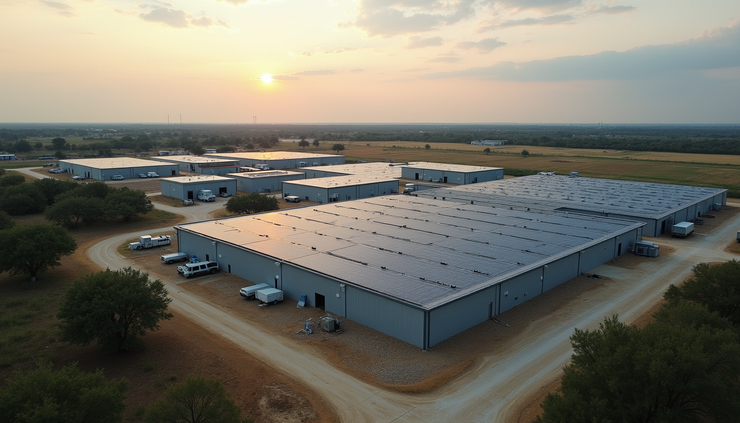
Google’s approach centers on building energy parks that combine solar generation, battery storage, and data centers in one location. This “behind-the-meter” setup allows Google to generate and store power onsite, reducing reliance on congested public grids.
One flagship example is the Quantum Clean Energy Project in Haskell County, Texas. This site will feature:
640 megawatts of solar power
1.3 gigawatt-hours of battery storage
A new data center campus
Scheduled for completion in late spring 2026, this project demonstrates how co-locating generation and storage can deliver reliable, clean power directly to data centers.
Supporting New Baseload Power with Carbon Capture
Google is also investing in innovative baseload power sources. The company recently signed a corporate agreement to support Broadwing Energy’s gas power plant in Decatur, Illinois. This plant will capture and permanently store about 90% of its CO2 emissions using carbon capture and storage (CCS) technology.
By agreeing to purchase most of the plant’s output, Google helps bring this low-carbon, reliable power source online. This move complements solar and storage by providing steady baseload power that supports data center operations when solar generation is low.
Acquiring Intersect Power to Expand Solar and Storage Capacity
In a major transaction valued at approximately $4.75 billion, Google has agreed to acquire Intersect Power, a California-based developer specializing in utility-scale solar and battery storage systems. The deal, expected to close in the first half of 2026, will strengthen Google’s ability to develop and operate large renewable energy projects.
This acquisition aligns with Google’s vision of building integrated energy parks that combine generation, storage, and data center infrastructure. It also signals a commitment to owning and controlling more of the energy supply chain.
Why Solar and Storage Are Ideal for Data Centers
Solar and battery storage offer several advantages for powering data centers:
Speed of deployment: Solar and storage projects can be built faster than traditional power plants or grid upgrades.
Geographical flexibility: These projects can be sited on or near data center campuses, reducing transmission losses and delays.
Grid congestion relief: By generating power onsite, data centers avoid interconnection queues and reduce strain on public grids.
Scalability: Battery storage smooths out solar’s intermittency, providing reliable power 24/7.
Using “private wire” or “direct connect” configurations, data centers can tap into these onsite resources without relying on congested utility infrastructure.
The Future of Data Center Energy
Google’s strategy highlights a broader trend in the tech industry: moving away from dependence on traditional utility grids toward self-sufficient, integrated energy systems. This shift enables faster scaling of renewable energy, reduces carbon footprints, and improves energy reliability.
As more hyperscale developers adopt co-located solar and storage, the energy landscape for data centers will become more decentralized and resilient. Google’s investments and projects provide a clear blueprint for how this transformation can happen.


Comments